The Bare Patch Is Not Always a Problem
Bare patch in the garden? Learn how to choose between planting, covering the soil or leaving it open, with practical ways to match your response to the site.
What should you do with a bare patch in the garden: plant it, cover it or leave it open? A bare patch in the garden can be a seasonal gap, a route worn by feet or a spot where runoff and shade make planting difficult. The best choice depends on what the space needs to do.
Start with its practical role, not its appearance. Is it part of a path, a place to reach a gate or a strip beside a shed that catches little rain? That question narrows the options without turning an empty patch into a problem that must be solved.
Match the patch to its place
Look at the patch alongside nearby features: a wall, tree canopy, lawn edge, drainpipe or well-used route. Notice where water flows, where shadows fall and whether neighbouring plants spread into the gap or stop at its boundary. These clues help you decide whether planting, a cover or clear access best suits the space.
Check the surface without digging. Cracks, a hard crust, moss, fallen leaves and small seedlings each suggest different conditions, though none tells the whole story alone. If the ground is compacted where people walk, for instance, adding plants without changing the route may simply leave them in the way.
What is not worth the effort is repeatedly scattering seed over a patch without matching the seed to its light, moisture and use. Nor is it useful to dig in compost or other amendments on guesswork; first identify a specific problem that the material is meant to address.
Use the shed-side patch to make a choice
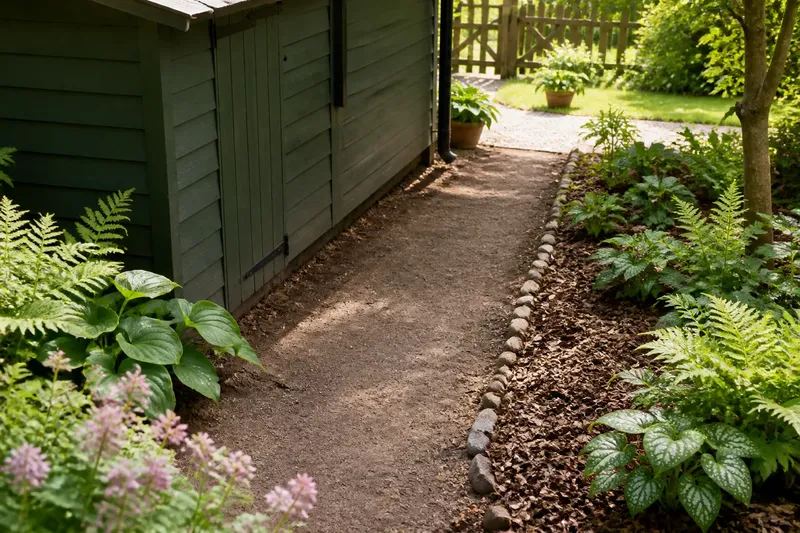
Say you have a bare strip beside a shed, beyond the usual foot traffic. It is a hypothetical situation: the roof overhang keeps rain from reaching the centre, and the shed casts shade there, while the outer edge receives more light and water.
You check the spot after rain and see that water runs off the roof rather than soaking into the centre. You also notice small weeds at the brighter edge but none beneath the overhang. The resulting decision is to leave the central strip open or cover it, and consider a shade-tolerant plant only at the edge, after checking its label and mature spread.
If you choose a cover, use a material suitable for the surrounding planting, such as leaf mould or an appropriate mulch. Keep it clear of stems and avoid piling it against the shed. If you leave the ground open, keep the area accessible and check that rain is not washing soil away.
Choose planting, cover or open ground
Plant when you can identify a suitable plant for the patch’s light, moisture and available space, and when it will not be trampled or obstruct access. A ground-covering plant may suit a broad area; a small group can define an edge. In either case, allow for the plant’s eventual spread rather than judging only by the empty space today.
Cover the soil when planting is not practical or when you want to protect the surface while keeping it accessible. Leaf mould, composted bark or another suitable mulch can make the area look intentional, but materials are not interchangeable. Consider nearby plants and follow any guidance on the product.
Leave the patch open when it provides useful access, gives a narrow garden room to breathe or marks a deliberate boundary. Bare ground is not automatically neglected. If it is exposed to runoff or regular foot traffic, though, check for erosion or compaction and adjust the layout if those become a concern.
Questions gardeners ask about bare patches?
How long should I watch a bare patch?
Revisit it during the season when you would normally expect nearby plants to grow, and after rain or ordinary garden use. If the conditions and the patch’s role remain clear, you can choose a response without waiting for an arbitrary period.
Does bare soil mean the ground is unhealthy?
No; shade, seasonal dieback, foot traffic or a deliberately open space can all leave soil bare. Look for a specific sign, such as water carrying soil away or a route becoming hard to use, before deciding that the ground needs treatment.
Should I sow a wildflower mix in an empty spot?
Check that the mix suits the site’s light and moisture, and that you can prepare and maintain the ground as its instructions require. If the area is shaded, dry or regularly trampled, a mix may not fit the conditions or the garden’s existing planting.
When should I seek help with a bare patch?
Ask a qualified horticultural professional if the soil keeps eroding, plants repeatedly fail despite a suitable choice, or the cause remains unclear. For a straightforward access or layout issue, moving the route or keeping the patch open may be enough.
Let the patch’s purpose guide the choice
For the imagined shed-side strip, the runoff and shade pointed to different choices for the centre and edge. Keeping the centre open or covered, while considering a suitable plant at the brighter edge, respects the way the space actually functions.
When deciding what to do with a bare patch in the garden, ask what belongs there and what the ground can support. A clear space may be doing useful work; if it is not, a well-matched plant or protective cover can make the change without fighting the site.