How Kitchen Scraps Became Garden Compost
Kitchen scraps to garden compost connects household food waste with garden soil; learn how the practice changed and what makes scraps useful today.
What happens to kitchen scraps when a household has no animals to eat them and no field beside the door? Kitchen scraps to garden compost now often means carrying peelings from a kitchen caddy to a garden heap, but that familiar route is only one way people have reused organic leftovers.
There is no single, well-documented timeline that turns this everyday practice into a neat story of invention. Its history is better understood through changing arrangements: farmyard reuse, urban waste collection and the modern household’s search for a suitable local destination.
Farm and household routines reused organic leftovers
In a farm household, plant residues, animal bedding and manure could be kept together and returned to cultivated ground. Kitchen leftovers might be fed to animals or join other organic material, depending on the household’s animals, space and routine. A separate kitchen caddy was not necessary for those routes to exist.
Those practices did not all amount to deliberate compost-making. Some material was gathered and spread; some decomposed in a heap before use. The useful distinction is between reusing organic matter and managing a pile specifically to produce a more broken-down soil amendment.
That difference matters because it avoids assigning one universal custom to households across different places and periods. A garden’s scraps had a destination shaped by what people kept, what land they cultivated and how they handled refuse.
Dedicated heaps made decomposition easier to observe
When gardeners gathered leaves, stems and kitchen trimmings together, they could see the mix change as it decomposed. Soft, wet scraps behaved differently from dry leaves and woody stems. Managing the heap meant paying attention to those differences rather than treating every leftover as interchangeable.
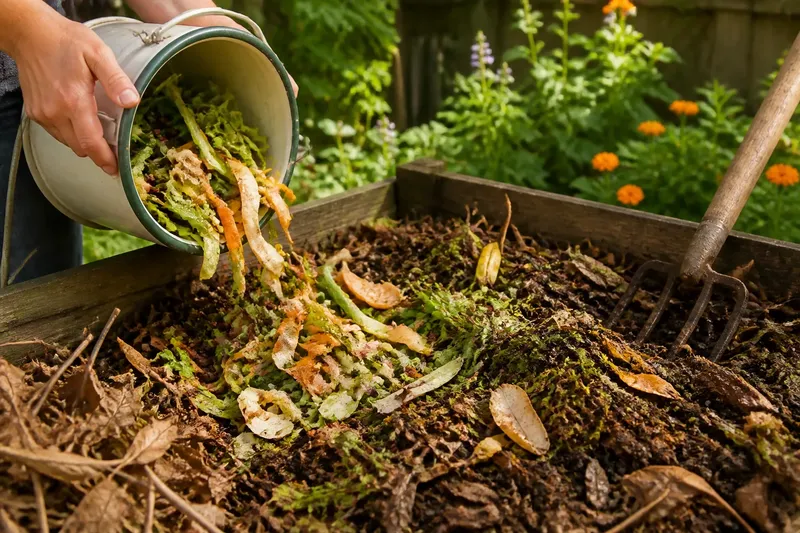
Imagine a gardener with a bucket of vegetable peelings and a loose pile of dry leaves. They mix the peelings through the leaves, then check the heap periodically: if it becomes wet and compacted, they add more dry, coarse material; if it stays dry and barely changes, they add a little water and mix it. The expected signs are a more evenly mixed heap and, over time under suitable conditions, material that is darker and less recognisable than the original scraps. The timing depends on the mix, weather and management; no fixed finishing date follows from this example.
A heap also made the work more deliberate. Gardeners could choose where to collect ingredients, keep them together and decide when the changed material seemed suitable to use. The pile became both a practical destination and a visible lesson in decay.
Urban refuse collection separated scraps from soil
In urban households, scraps could become part of refuse removed from the home rather than material returned nearby to a garden. The details varied by place and period, so this is not a claim that every town followed one path. It describes a change in the relationship between household leftovers and cultivated ground: collection could carry them away from the person who had produced them.
For a gardener with outdoor space, keeping food scraps separate offered another option. A small caddy could collect suitable material indoors, while a garden heap received it alongside dry leaves or plant trimmings. Where a home had no heap, community composting or a local food-waste service could provide a different route, subject to its accepted-material rules.
The caddy did not create the idea of reusing organic matter. It made the separation visible at the point of food preparation, giving scraps a distinct destination instead of mixing them with general rubbish.
Compost took on a broader role in garden care
Compost became more than a place to send leftovers when gardeners considered how organic matter affects the ground. Mature compost can contribute organic material and help create a crumbly surface, but it is not a universal remedy. Drainage, light, plant choice and soil conditions can call for different responses.
That is why compost is best understood as one material within a garden’s wider care, not as an answer to every struggling plant. A gardener might add it to a bed as part of routine organic-matter management while still checking whether the plant is suited to the site or whether water is standing in the soil.
It is not worth buying an elaborate bin simply because it looks more serious. If a household will not use the system, a simpler heap, shared scheme or local collection route may be the more workable choice.
Kitchen scraps to garden compost depends on the route available
Today’s household options reflect space and local arrangements rather than one ideal method. A garden heap can take suitable scraps mixed with dry plant material; a community site or council service may accept a different range. Follow the rules for the specific system, especially for cooked food, meat or dairy, which some garden heaps should not receive.
- If you have outdoor space and a supply of dry leaves or stems, then mix suitable scraps into a contained heap; if you lack dry material, store scraps briefly and find a leaf source or use another collection route.
- If the heap smells sour or looks slimy, then add dry, coarse leaves or shredded cardboard and mix it; if the smell continues, reduce wet additions and check that the heap can drain.
- If scraps remain exposed on the surface, then cover them with leaves or other dry garden material; if animals still disturb the heap, use a more secure container or a service that accepts the scraps.
- If you have no garden heap, then check your council’s food-waste instructions; if no suitable service exists, look for a community composting site or follow local waste guidance.
- If your collection scheme excludes a material, then keep it out of that caddy; if you are unsure, check the scheme’s accepted-material list rather than assuming a home-heap rule applies.
- If finished material still contains recognisable scraps, then leave it to break down further or screen out the unfinished pieces; if it is consistently wet and compacted, improve the mix with dry, coarse material before waiting.
What gardeners ask about kitchen compost?
Why mix kitchen scraps with dry material?
Dry leaves, stems or shredded cardboard can help balance wet, soft scraps and leave the heap less compacted. If the heap remains soggy, add more dry material and mix it through rather than piling it on as an untouched cap.
Did households always use compost bins?
No single container defines the practice. Organic leftovers could be reused through household or farm routines, while a modern bin or caddy helps keep materials separate and contained.
Can compost solve every soil problem?
No. Compost adds organic material, but it cannot by itself resolve every issue with drainage, light, plant suitability or soil conditions. Match the response to the problem you can observe.
What can I do without a garden heap?
Check for a council food-waste collection or community composting site and follow its accepted-material rules. If neither is available, use the local waste guidance rather than storing scraps indefinitely.
Kitchen scraps to garden compost is not one unbroken tradition with the same tools everywhere; it is a practical connection that households have arranged in different ways. The useful point today is to choose a route that keeps scraps separate, follows the receiving system’s rules and fits the space and materials you actually have.